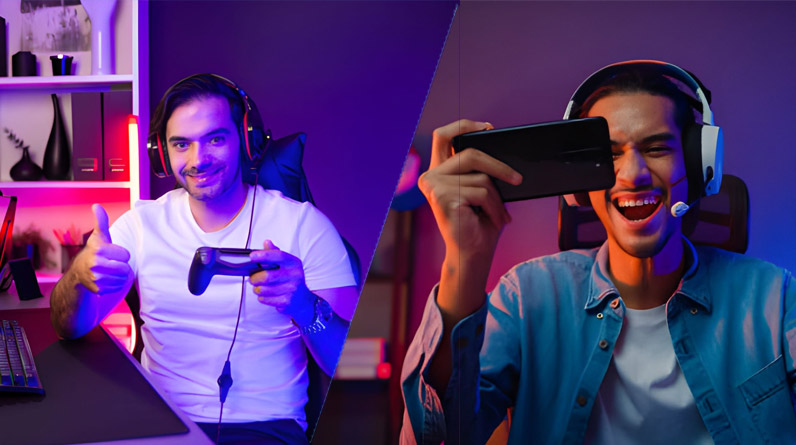
The mobile gaming landscape is experiencing a seismic shift, and 5G technology stands at the epicenter of this transformation. As the fifth generation of wireless technology rolls out across the globe, gamers are discovering a completely new dimension of mobile gameplay that was simply impossible with previous network generations.
Gone are the days when mobile gaming meant simple puzzle games or casual time-wasters. Today’s mobile games rival console experiences in graphics, complexity, and competitive intensity. But there’s been one persistent bottleneck holding everything back: network performance. That’s where 5G enters the scene as a genuine game-changer.
The Speed Revolution: More Than Just Faster Downloads
When most people hear about 5G, they think about download speeds. And yes, the numbers are impressive. While 4G LTE networks typically deliver speeds between 20-50 Mbps, 5G networks can reach theoretical speeds of up to 10 Gbps. According to Ericsson’s Mobility Report, real-world 5G speeds currently average between 100-400 Mbps, representing a tenfold improvement over 4G.
But here’s what matters for gamers: this speed translates to downloading a 2GB game in seconds rather than minutes. More importantly, it means game updates, patches, and additional content become nearly instantaneous. No more waiting around for that crucial update to finish before you can jump into a match with friends.
Latency: The Real Game-Changer for Competitive Play
Speed gets the headlines, but latency is what truly transforms the gaming experience. Latency refers to the delay between your action and the game’s response. In competitive gaming, even milliseconds matter.
From Milliseconds to Victory
4G networks typically operate with latency between 30-50 milliseconds. That might sound fast, but in intense gaming scenarios, it creates noticeable lag that can mean the difference between victory and defeat. 5G networks reduce this to just 1-10 milliseconds, approaching the responsiveness of wired connections.
Professional mobile esports players have reported that 5G connectivity allows them to execute complex maneuvers with precision that was previously only possible on dedicated gaming equipment. For first-person shooters, battle royales, and real-time strategy games, this reduction in latency fundamentally changes what’s possible on mobile devices.
Cloud Gaming: Console Experiences in Your Pocket
Perhaps nothing demonstrates 5G’s transformative potential quite like cloud gaming. Services like Xbox Cloud Gaming, NVIDIA GeForce NOW, and PlayStation Plus Premium allow players to stream high-end games directly to their phones without requiring powerful hardware.
The catch? These services demand robust network performance. Research from telecommunications analyst OpenSignal indicates that 5G networks maintain consistent quality for cloud gaming services, with fewer interruptions and better visual fidelity compared to 4G networks.
Breaking Hardware Barriers
With 5G-enabled cloud gaming, you don’t need a flagship smartphone with the latest processor to play graphically intensive games. The heavy computational lifting happens on remote servers, and 5G’s bandwidth ensures smooth streaming of high-quality video with minimal compression artifacts. This democratizes access to premium gaming experiences across a wider range of devices.
Enhanced Multiplayer and Social Gaming
Mobile gaming has always been social, but 5G takes community interaction to unprecedented levels. The combination of high bandwidth and low latency enables features that were technically impractical on 4G networks.
Real-time voice chat with multiple players runs smoothly without the choppy audio that plagued previous generations. Live-streaming your gameplay while simultaneously playing demanding titles becomes feasible. Massive multiplayer battles with dozens or even hundreds of players on screen simultaneously are now within reach for mobile platforms.
Augmented Reality Gaming Takes Flight
Remember the Pokemon GO craze? That was just the beginning. 5G’s capabilities unlock far more sophisticated augmented reality experiences. Games can layer complex 3D graphics over the real world, support multiplayer AR experiences where multiple players interact with the same virtual objects in real-time, and create persistent virtual objects that remain in physical locations for other players to discover.
These AR experiences require processing massive amounts of data from cameras, GPS, and environmental sensors simultaneously. 5G’s bandwidth makes this not just possible but smooth and responsive.
The Economic Impact: A Booming Industry
The mobile gaming industry already generates over $90 billion annually according to market research firm Newzoo, representing more than half of all gaming revenue globally. Industry analysts project that 5G adoption will accelerate this growth substantially.
Game developers are investing heavily in 5G-optimized titles that take advantage of the technology’s capabilities. We’re seeing emergence of entirely new genres specifically designed around 5G’s strengths: ultra-responsive competitive games, graphically ambitious mobile-first experiences, and hybrid games that blend real-world activities with digital gameplay.
Challenges on the Horizon
Despite the excitement, the transition isn’t without obstacles. 5G coverage remains uneven, particularly in rural areas. Data plans with adequate bandwidth can be expensive. Battery consumption on 5G connections tends to be higher than 4G, which matters when you’re deep into an extended gaming session.
Device compatibility also varies. While most new smartphones support 5G, the technology works best with recent models optimized for the new standard. This creates a temporary divide between players with cutting-edge hardware and those on older devices.
Looking Ahead: The Future of Mobile Gaming
As 5G networks mature and coverage expands, we’ll likely see innovations we can barely imagine today. Think AI-powered gaming assistants that adapt to your play style in real-time, cross-platform experiences where mobile players compete equally with console and PC gamers, and virtual reality experiences that work wirelessly through mobile networks.
The transformation isn’t just about better graphics or faster loading times. 5G is fundamentally redefining what mobile gaming can be, erasing the boundaries between mobile and traditional gaming platforms. For players, developers, and the industry as a whole, we’re standing at the threshold of an exciting new era.
The question isn’t whether 5G will transform mobile gaming—it already is. The real question is how quickly players and developers will embrace these new possibilities and where this technological leap will ultimately take us.