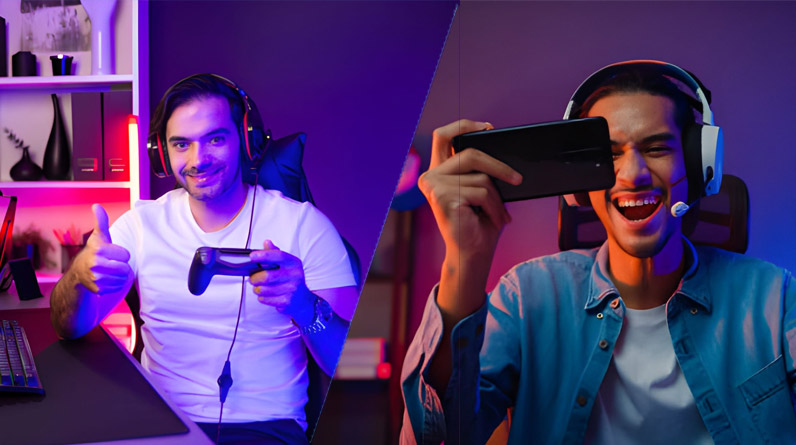
You’re deep into your favorite mobile game when a notification pops up: “Limited-time offer! Exclusive legendary skin—only 24 hours left!” Your finger hovers over the purchase button. It’s just a digital cosmetic item, something that exists only in pixels, yet you find yourself reaching for your wallet. Sound familiar?
You’re not alone. In 2024, gamers spent over $147 per person annually on in-game purchases according to IconEra, contributing to a mobile gaming market that generated more than $80 billion in in-app purchases. The U.S. video game market alone reached $58.7 billion in total consumer spending in 2024, with mobile games accounting for approximately half of all video game content spending at $26 billion, as reported by the Entertainment Software Association.
But here’s the fascinating question: why do we willingly spend real money on virtual goods that have no physical form? The answer lies in a complex web of psychological triggers, behavioral economics, and clever game design that taps directly into how our brains process reward and motivation.
The Dopamine-Driven Reward System
At the heart of every in-game purchase is your brain’s reward circuitry. When you unlock a rare character skin or open a loot box, your brain releases dopamine—a neurotransmitter associated with pleasure and motivation. This isn’t just speculation; research published in Nature has demonstrated actual striatal dopamine release during video game play.
Game developers understand this biological response intimately. They’ve engineered reward systems that create what psychologists call a “compulsion loop”—a three-part cycle of anticipation, action, and reward. Interestingly, dopamine is released not when you receive the reward, but during the anticipation phase. This explains why the moments before opening a loot box feel so thrilling.
Variable Reward Schedules: The Slot Machine Effect
The most powerful dopamine triggers in gaming come from unpredictable rewards. Loot boxes operate on the same psychological principle as slot machines: variable ratio reinforcement. You never know what you’ll get, and this unpredictability creates stronger engagement than predictable rewards ever could.
When you open ten loot boxes and nine contain common items, that tenth box with the rare legendary drop feels exponentially more rewarding. Your brain interprets this as “the next one could be the big win,” keeping you in a cycle of continued spending and engagement.
The Fear of Missing Out (FOMO): Scarcity as a Sales Tool
Limited-time offers aren’t just marketing gimmicks—they’re psychological triggers rooted in loss aversion. According to research in behavioral economics, humans feel the pain of loss approximately twice as intensely as the pleasure of equivalent gain. Game developers weaponize this asymmetry through time-limited events, seasonal skins, and exclusive battle passes.
Consider Fortnite’s rotating item shop or seasonal battle passes. Players report feeling compelled to purchase items not because they desperately want them, but because they might never have another chance. A 2025 study noted that nearly 19 percent of young Japanese gamers admitted spending so much on in-game purchases that they struggled to afford basic necessities, with 24 percent expressing regret over their gaming expenditures.
Social FOMO: Keeping Up in Virtual Worlds
FOMO becomes even more powerful when combined with social dynamics. When your friends have the latest premium skin or exclusive emote, the psychological pressure intensifies. You’re not just missing out on a digital item—you’re potentially missing out on social validation and status within your gaming community.
This taps into social comparison theory, which suggests we determine our self-worth partly by evaluating ourselves against others. In online multiplayer games, cosmetic items become status symbols. The player with rare skins signals dedication, success, or financial investment to their peers.
The Sunk Cost Fallacy: Throwing Good Money After Bad
Once you’ve invested time or money into a game, the psychological trap tightens through the sunk cost fallacy. This cognitive bias causes us to continue investing in something simply because we’ve already invested so much, even when continuing makes little rational sense.
Imagine you’ve spent $50 on a mobile game over several months. When a new premium currency pack goes on sale, part of your brain rationalizes: “I’ve already invested so much, I might as well keep going to make that investment worthwhile.” This thinking is backwards—past investments shouldn’t influence future decisions—but it’s remarkably powerful.
The Progression Trap
Games with lengthy progression systems amplify the sunk cost fallacy. World of Warcraft players who’ve spent hundreds of hours leveling characters often feel they can’t quit because abandoning those characters means “wasting” their time investment. Similarly, players who’ve purchased previous seasons of a battle pass feel compelled to buy the next one to maintain their collection.
Clash of Clans exemplifies this through base-building mechanics that require significant time investment. Once players have spent weeks developing their base, the psychological cost of walking away feels substantial, even if they’re no longer enjoying the game.
Mental Accounting: Why Virtual Currency Works
Ever notice how games rarely let you purchase items directly with real money? Instead, you buy gems, coins, V-Bucks, or whatever branded currency the game uses. This isn’t accidental—it’s mental accounting in action.
When you purchase 1,000 gems for $9.99, you create a mental separation from real money. Spending 500 gems on a cosmetic item feels less painful than spending $5 directly. The virtual currency acts as a psychological buffer, making it easier to justify purchases because you’re not thinking in terms of actual dollars.
The Discount Illusion
Virtual currency also enables perceived discounts. Bulk packages create the illusion of value: “Get 1,100 gems for $9.99 instead of 1,000!” You’re encouraged to spend more money upfront to “save” on the per-gem cost. Many players end up with leftover currency that sits unused or pushes them toward additional purchases to “use it up.”
Achievement and Mastery: The Intrinsic Motivators
Not all in-game purchases stem from manipulative psychology. Self-determination theory identifies competence as a fundamental human need. When games offer items that help players feel more skilled or accomplished, they’re tapping into genuine intrinsic motivation.
A hero skin might boost confidence in ranked matches. An exclusive emote lets players express personality. Special abilities can reduce frustration with difficult content. These purchases aren’t always about exploitation—sometimes they genuinely enhance the gaming experience and player satisfaction.
The Personalization Premium
Humans crave self-expression, and in virtual worlds, cosmetic items serve this psychological need. Your avatar represents you in the game world. Customizing it with unique skins, outfits, or accessories creates a sense of identity and ownership that transcends the digital realm.
This explains why cosmetic-only purchases remain popular even when they provide no gameplay advantage. Players value the ability to stand out, showcase their taste, and create a virtual identity that feels authentic to them.
The Whale Phenomenon: Understanding High Spenders
In free-to-play economics, approximately 10 percent of players (called “whales”) account for roughly 50 percent of revenue according to research on consumer behavior in gaming. These high spenders aren’t necessarily wealthy—they’re often individuals particularly susceptible to the psychological mechanisms we’ve discussed.
Whales frequently exhibit characteristics of the sunk cost fallacy on steroids. Their previous investments psychologically justify subsequent purchases in an attempt to avoid “waste.” Game developers use data analytics to identify potential whales early and target them with personalized offers designed to encourage continued spending.
This raises significant ethical concerns. When monetization strategies deliberately target psychological vulnerabilities, especially in individuals prone to addictive behaviors, the line between engagement and exploitation becomes uncomfortably blurred.
Battle Passes: The Subscription Psychology
Battle passes represent a masterclass in combining multiple psychological triggers. For a single upfront payment, you unlock a progression system with tiered rewards. This structure engages several powerful motivators simultaneously.
First, loss aversion: once you’ve purchased the pass, not progressing through it feels like wasting money. Second, the sunk cost fallacy: time invested completing challenges makes you more likely to purchase the next season’s pass. Third, FOMO: battle passes are time-limited, creating urgency. Fourth, social pressure: friends who’ve completed the pass showcase their exclusive rewards.
The “Free” Tier Trap
Many battle passes offer free and premium tiers simultaneously. You can see exactly what premium players are earning while you receive lesser rewards. This creates a constant reminder of what you’re missing, subtly pushing free players toward purchase through perpetual comparison.
Meanwhile, completing the free tier requires similar time investment to the premium tier. When you’ve already invested hours grinding challenges, paying to unlock the premium rewards you’ve technically “already earned” feels more justified.
Impulse Buying and Decision Fatigue
Mobile games capitalize on impulse purchasing through strategic timing. Special offers appear after victories when you’re feeling good, or after defeats when you’re frustrated and seeking an advantage. The purchase process is deliberately frictionless—often requiring just a fingerprint or face scan.
This ease of purchase, combined with decision fatigue from daily life, creates conditions ripe for impulsive spending. When you’re tired after a long day, your executive function weakens. That $4.99 purchase seems insignificant, even if you make similar purchases several times weekly.
The Ethics of Psychological Monetization
Understanding these mechanisms raises important ethical questions. Is it acceptable for game developers to deliberately exploit psychological vulnerabilities for profit? Where’s the line between engaging game design and predatory monetization?
Some countries have taken regulatory action. Belgium and the Netherlands have restricted certain loot box mechanics, classifying them as gambling. Other jurisdictions require transparent disclosure of drop rates. The gaming community itself has pushed back against aggressive monetization, forcing developers to reconsider their approaches.
Protecting Yourself: Awareness as Defense
The most effective defense against manipulative monetization is awareness. Understanding why you feel compelled to purchase helps you make more rational decisions. Consider these strategies:
- Set strict budgets: Decide your monthly gaming expenditure limit and stick to it religiously
- Wait 24 hours: Before any purchase, impose a mandatory waiting period to bypass impulse triggers
- Recognize FOMO: Remember that “limited-time” offers almost always return in some form
- Calculate real costs: Convert virtual currency back to actual dollars before spending
- Question the sunk cost: Past spending shouldn’t justify future purchases
The Future of In-Game Monetization
As players become more educated about psychological monetization tactics, developers face pressure to adopt more ethical approaches. Some companies are shifting toward transparent, cosmetic-only systems. Others are experimenting with battle passes that don’t expire, reducing FOMO pressure.
The industry is also seeing growth in alternative models. Subscription services like Xbox Game Pass reduce reliance on in-game purchases by providing access to large game libraries. Meanwhile, the blockchain gaming movement promises player ownership of digital assets, though it introduces new concerns around speculation and environmental impact.
According to Newzoo, PC gaming microtransactions reached $24.4 billion in 2024, accounting for 58 percent of all PC gaming revenue. With numbers this significant, the conversation around ethical monetization will only intensify.
Conclusion: Making Informed Choices
In-game purchases aren’t inherently evil. They enable free-to-play models that make gaming accessible to millions who couldn’t afford $60 premium titles. They allow ongoing development and live service games that evolve over years. Many players happily spend on games they love as a form of support for developers.
The problem emerges when psychological manipulation crosses ethical boundaries—when FOMO creates anxiety, when sunk cost fallacies lead to financial problems, when dopamine-driven compulsion loops foster addictive behaviors.
With 52 percent of players making in-game purchases at least monthly (IconEra, 2025), and the global in-game purchase market projected to exceed $74 billion in 2025 (Statista), understanding the psychology behind these purchases has never been more important.
By recognizing how games trigger dopamine release, exploit loss aversion, and leverage behavioral economics, you can make more intentional choices about your gaming expenditures. The goal isn’t to never spend on games you enjoy—it’s to spend consciously, free from psychological manipulation, and in ways that genuinely enhance your gaming experience rather than feed compulsion.
The next time that limited-time offer notification appears, you’ll understand exactly what’s happening in your brain. And that awareness might just be the difference between an informed purchase and a regretted impulse buy.